
Storing art in South Africa is tougher than most people think. Even small shifts in climate can ruin rare pieces and leave owners with costly damage. Shockingly, just a 5 percent rise in humidity can trigger mould and warping in a matter of weeks. Some assume a locked room or cupboard is enough, but what matters most is how you shield art from silent threats most never see coming.
Table of Contents
- Choosing The Right Storage Environment
- Temperature And Humidity Control
- Protective Storage Solutions
- Location And Security Considerations
- Preparing Artworks Before Storing
- Cleaning And Surface Preparation
- Protective Packaging And Materials
- Documentation And Condition Assessment
- Best Practices For Packing And Handling
- Personal Handling Protocols
- Packing Materials And Techniques
- Transportation And Storage Considerations
- Long-Term Maintenance And Security Tips
- Documentation And Record Keeping
- Security Infrastructure And Monitoring
- Periodic Conservation And Maintenance
Quick Summary
Takeaway Explanation
Maintain stable temperature and humidity Keep artwork in environments with 18-22°C temperature and 45-55% humidity to prevent damage.
Use archival-quality storage materials Protect artworks with acid-free tissue and archival boxes to prevent chemical degradation and physical harm.
Document artwork’s condition thoroughly Maintain detailed records and photographs of each artwork’s condition for future assessments, insurance, and conservation planning.
Implement robust security measures Use lockable storage solutions and surveillance to protect art collections from theft and damage effectively.
Schedule regular professional inspections Engage art conservators for annual condition assessments to identify and address any early signs of deterioration.
Choosing the Right Storage Environment
Preserving valuable artworks requires creating an optimal storage environment that protects against potential damage from environmental factors. Artists and collectors in South Africa must understand how to store artworks effectively to maintain their integrity and value over time.
Temperature and Humidity Control
The foundation of proper artwork storage is maintaining stable temperature and humidity levels. The Smithsonian Museum Conservation Institute recommends creating an environment with consistent conditions to prevent deterioration. Extreme fluctuations can cause significant damage to artwork, leading to warping, cracking, or mold growth.
Ideal storage conditions typically involve:
- Temperature: Maintain a consistent range between 18-22 degrees Celsius
- Humidity: Keep relative humidity between 45-55 percent
- Avoid direct sunlight: Use UV-filtering materials to protect artwork from light damage
Professional art conservators suggest using specialized climate control systems or dedicated storage rooms that can maintain these precise environmental parameters. For smaller collections, invest in dehumidifiers and temperature monitoring devices to create a stable microclimate.
Protective Storage Solutions
Artwork requires more than just environmental control. Conservation experts from the International Institute for Conservation emphasize the importance of using appropriate storage materials and techniques. Acid-free archival boxes, padded shelving, and protective wrapping are essential for preventing physical damage.
Key storage considerations include:
- Archival-grade materials: Use acid-free tissue paper, archival boxes, and protective covers
- Vertical storage: Store framed artworks vertically to minimize stress on the artwork
- Handling precautions: Always use clean cotton gloves when moving or touching artwork
For unframed pieces like drawings or watercolors, consider using archival portfolio cases or flat storage systems that provide consistent support and protection. Rolled artworks should be stored on specialized cylindrical supports to prevent creasing or structural damage.
To help you select appropriate storage solutions for your art, the table below summarises recommended materials, best usage, and handling precautions for different artwork types mentioned in the article.
Artwork Type Recommended Storage Material Best Storage Method Handling Precaution
Paintings Acid-free tissue paper, archival box Vertical storage, protected Use clean cotton gloves
Drawings & Prints Archival portfolio, acid-free tissue Flat storage Handle by edges
Sculptures Custom foam supports, archival boxes Supported, padded shelf Use cotton gloves, steady
Unframed Canvases Rigid backing boards, tissue paper Flat or rolled on support Avoid surface contact
Framed Pieces Acid-free covers, corner protectors Vertical, with frame padding Gloves, support corners
Location and Security Considerations
Choosing the right physical location for artwork storage is equally critical. Avoid areas prone to moisture, extreme temperature changes, or potential pest infestations. Ideal storage spaces include interior rooms away from external walls, with minimal foot traffic and controlled access.
Implement additional security measures such as:
- Lockable storage units
- Climate-controlled art storage facilities
- Security systems and monitored environments
- Regular inspection and maintenance of storage areas
By carefully selecting and maintaining a storage environment that addresses temperature, humidity, physical protection, and security, South African art collectors can ensure the long-term preservation of their valuable artworks. Professional consultation with art conservation specialists can provide tailored advice for specific collections and storage challenges.
Preparing Artworks Before Storing
Preparing artworks for storage is a critical process that requires meticulous attention to detail and careful handling. Proper preparation can significantly extend the longevity of valuable art pieces and prevent potential damage during storage.
Cleaning and Surface Preparation
The Smithsonian Museum Conservation Institute emphasizes the importance of thorough yet gentle cleaning before storage. Use soft, dry brushes to remove dust and debris from artwork surfaces. Avoid using water or liquid cleaning solutions, as these can cause irreparable damage to delicate materials.
For different types of artworks, cleaning approaches vary:
- Paintings: Use soft, clean brushes with natural bristles
- Drawings and Prints: Employ soft photography brushes or microfiber cloths
- Sculptures: Carefully remove dust with soft brushes or compressed air
Special care must be taken with fragile or historical pieces. When in doubt, consult a professional art conservator who can provide specialized cleaning techniques for unique or valuable artworks.
Protective Packaging and Materials
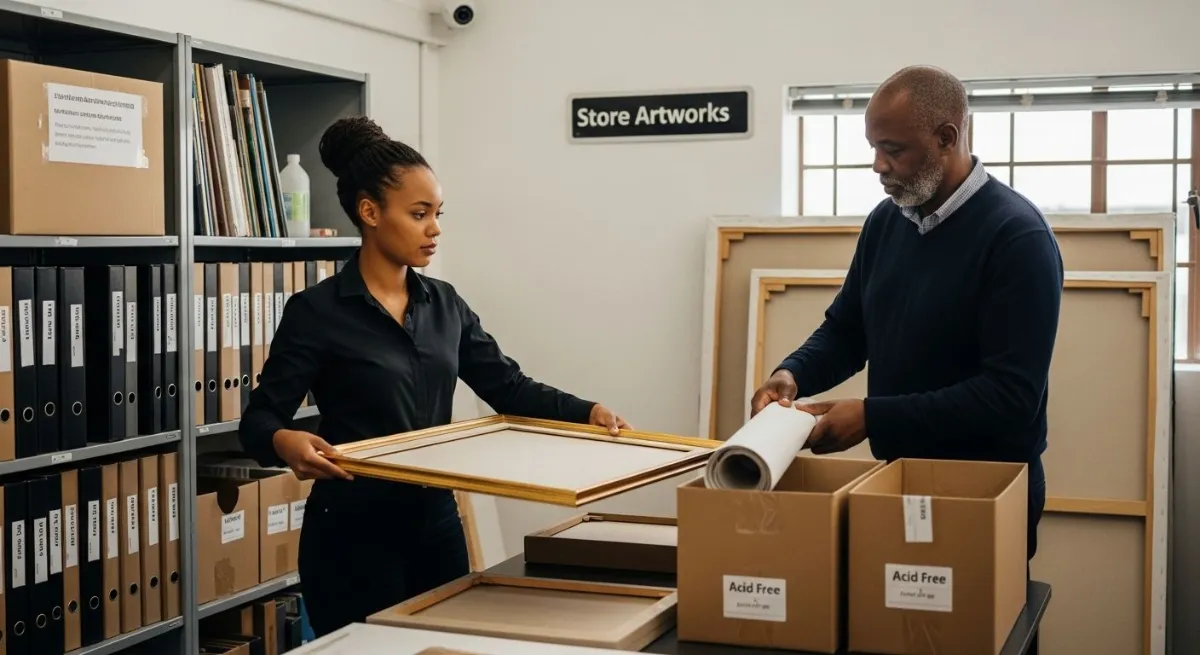
The National Park Service recommends using archival-grade materials for artwork protection. Select acid-free tissue paper, archival boxes, and protective covers that prevent chemical degradation and physical damage. Avoid using standard cardboard or wood-based materials, as these can emit harmful acids that deteriorate artwork over time.
Key packaging considerations include:
- Acid-free wrapping: Use museum-quality tissue paper and archival boxes
- Protective covers: Select Tyvek or unbleached cotton for paintings
- Labeling: Place identification labels on the back of artworks
- Hardware removal: Detach hanging mechanisms to prevent potential damage
For works on paper, create protective barriers using acid-free tissue or glassine paper. Framed pieces should be wrapped carefully to prevent abrasions and protect glass surfaces.
Documentation and Condition Assessment
Before storing artworks, conduct a comprehensive condition assessment. Explore our guide on art preservation to understand the nuanced details of artwork documentation. Create detailed records that include:
- Current condition notes
- Photographic documentation
- Measurements and specific artwork characteristics
- Any existing damage or restoration history
Maintain a digital and physical record of each artwork’s condition before storage. This documentation serves multiple purposes:
- Tracking potential future deterioration
- Insurance and valuation purposes
- Providing reference for future conservation efforts
Professional art handlers recommend creating a systematic inventory with high-resolution photographs and comprehensive condition reports. This approach ensures accurate tracking and provides valuable information for potential future restoration or authentication processes.
The table below organises the key steps for preparing artworks before storage, aligning with recommendations from institutions mentioned in the article. This checklist can help ensure each task is completed systematically.
Step Action Required Notes/Precaution
Surface Cleaning Use soft brush, no water Consult conservator for fragile pieces
Acid-free Wrapping Wrap with museum-quality tissue paper Avoid wood/cardboard materials
Use Protective Covers Cover with Tyvek or unbleached cotton For paintings and delicate surfaces
Remove Hardware Detach hanging mechanisms Prevents damage during storage
Label Artwork Place ID label on back Use non-invasive, archival labels
Document Condition Take photos, record current state Record any existing damage/restoration
Maintain Inventory Log artwork details and storage location Keep physical & digital copies secure
By following these meticulous preparation steps, South African art collectors can significantly enhance the preservation of their valuable artworks, protecting them from environmental risks and potential degradation during storage.
Best Practices for Packing and Handling
Handling and packing artworks requires precision, care, and specialized knowledge to prevent potential damage during transportation and storage. South African art collectors must understand the nuanced techniques that protect valuable pieces from physical and environmental risks.
Personal Handling Protocols
The Smithsonian Museum Conservation Institute emphasizes critical guidelines for minimizing risks during artwork handling. Always wear clean, lint-free cotton gloves to prevent oils and dirt from transferring onto artwork surfaces. Handle pieces by their edges or designated sturdy areas, avoiding contact with delicate painted or textured surfaces.
Specific handling recommendations include:
- Minimal contact: Touch artwork as little as possible
- Clean hands: Use cotton gloves or thoroughly wash and dry hands
- Steady movements: Move slowly and deliberately
- Single person handling: Limit artwork movement to one trained individual
For larger or heavier artworks, consider professional art handlers who understand weight distribution and complex manipulation techniques. Never attempt to move oversized pieces without proper training and equipment.
Packing Materials and Techniques
Choosing appropriate packing materials is crucial for artwork preservation. Conservation experts recommend using archival-quality materials that provide cushioning and protection against environmental fluctuations.
Essential packing components include:
- Acid-free tissue paper: Create protective layers between artwork surfaces
- Bubble wrap: Use for additional cushioning (wrap loosely to prevent pressure)
- Custom foam supports: Provide stable, shock-absorbing foundations
- Wooden crates: For significant transportation, use custom-built protective containers
Packing techniques vary depending on artwork type:
- Framed pieces: Wrap frame corners, use corner protectors
- Unframed canvases: Use rigid backing boards
- Sculptures: Create custom foam supports matching object contours
Transportation and Storage Considerations
Transporting artwork requires strategic planning and environmental consciousness. Maintain consistent temperature and humidity levels during movement. Avoid exposing artworks to direct sunlight, extreme temperatures, or sudden environmental changes.
Transportation best practices include:
- Use climate-controlled vehicles
- Secure artwork to prevent shifting
- Plan routes to minimize vibration and potential impact
- Schedule transportation during moderate temperature periods
Additional protective strategies:
- Insurance: Obtain comprehensive art transportation insurance
- Documentation: Photograph artwork before and after transportation
- Professional services: Consider specialized art shipping companies
By implementing these meticulous handling and packing protocols, South African art collectors can significantly reduce the risk of damage during transportation and storage. Professional consultation and continuous education remain essential for maintaining artwork integrity in dynamic environmental conditions.
Long-Term Maintenance and Security Tips
Maintaining and securing art collections requires comprehensive strategies that go beyond initial storage considerations. South African art collectors must develop systematic approaches to protect their valuable investments from potential risks and deterioration.
Documentation and Record Keeping
The Smithsonian American Art Museum emphasizes the critical importance of meticulous documentation for artwork preservation. Develop a comprehensive digital and physical record for each artwork that includes detailed information such as provenance, artist background, purchase history, and current condition.
Key documentation elements should encompass:
- Photographic evidence: High-resolution color photographs from multiple angles
- Detailed descriptions: Complete artwork specifications
- Provenance tracking: Full ownership and exhibition history
- Conservation records: Documentation of any restoration or maintenance work
- Insurance appraisals: Current valuation documents
Maintain multiple backup copies of documentation, storing digital files in secure cloud storage and keeping physical copies in fireproof, climate-controlled environments.
Security Infrastructure and Monitoring
The Northeast Document Conservation Center recommends implementing comprehensive security measures to protect art collections. Design storage areas with strategic considerations that minimize potential theft or damage risks.
Critical security strategies include:
- Access control: Limit entry to authorized personnel
- Surveillance systems: Install monitored security cameras
- Environmental monitoring: Use sensors tracking temperature, humidity, and potential intrusion
- Regular inventory checks: Conduct systematic collection assessments
- Secure storage furniture: Use lockable, robust storage units
Consider creating replicas or digital reproductions of valuable pieces to minimize handling of original artworks, reducing potential damage risks.
Periodic Conservation and Maintenance
Regular professional assessment ensures artwork longevity. Schedule periodic inspections with qualified art conservators who can identify early signs of deterioration and recommend preventative interventions.
Maintenance recommendations:
- Annual professional inspections: Comprehensive artwork condition assessments
- Cleaning protocols: Gentle, professional cleaning techniques
- Restoration planning: Proactive conservation strategies
- Insurance updates: Regular valuation and coverage adjustments
Develop relationships with reputable art conservation specialists who understand the unique environmental challenges faced by South African collectors. These professionals can provide tailored advice addressing regional humidity, temperature variations, and specific preservation requirements.
By implementing these systematic maintenance and security approaches, art collectors can protect their investments, preserve cultural heritage, and ensure the long-term integrity of their valuable artwork collections. Continuous education, professional consultation, and proactive management remain essential in safeguarding artistic treasures.
Frequently Asked Questions
How can I control the temperature and humidity when storing artworks in South Africa?
To protect artworks, maintain a consistent temperature range between 18-22°C and relative humidity between 45-55%. Consider using dehumidifiers and climate control systems to manage these conditions effectively.
What materials are recommended for protective packaging of artworks?
Use acid-free tissue paper, archival boxes, and Tyvek covers to prevent chemical degradation and physical damage. These materials help protect against moisture and dust, ensuring the longevity of your artworks.
What precautions should I take when handling and packing artworks for storage?
Always wear clean, lint-free gloves, handle artworks by their edges, and use cushioning materials like acid-free tissue and bubble wrap. For larger pieces, consider professional help to avoid accidental damage during handling.
Why is documentation important before storing artworks?
Documenting each artwork’s condition with detailed notes and photographs helps track deterioration over time, assists with insurance claims, and provides valuable information for future conservation efforts.
Give Your Artworks the Protection They Deserve
You have put in real effort to learn about humidity control, proper documentation, and the safest packaging methods. But keeping rare or valuable pieces protected can feel overwhelming, especially when South Africa’s changing climate throws curveballs. Don’t let months or years of careful collecting disappear because of a simple oversight or materials that cause damage you cannot see. Secure the full value and beauty of your collection with expert support.
Our team at Art Online understands what it means to trust someone with your collection. We are South Africa’s leading destination for buying, selling, and preserving fine art. From in-depth art preservation tips to new acquisitions from proven artists, our network and resources are designed to help you keep your artworks in top condition. Visit Art Online now to discover the latest guidance and solutions tailored for collectors who want peace of mind—before avoidable damage occurs.
Recommended
- Top Art Festivals in South Africa 2025 for Collectors & Decorators – Art-Online
- Canvas vs Framed Art: Guide for South African Collectors 2025 – Art-Online
- Buying Art for Investment in South Africa: 2025 Guide – Art-Online
- Famous South African Artists: 2025 Guide for Collectors & Decorators – Art-Online