Laurens Barnard – The Visionary Behind Laubar
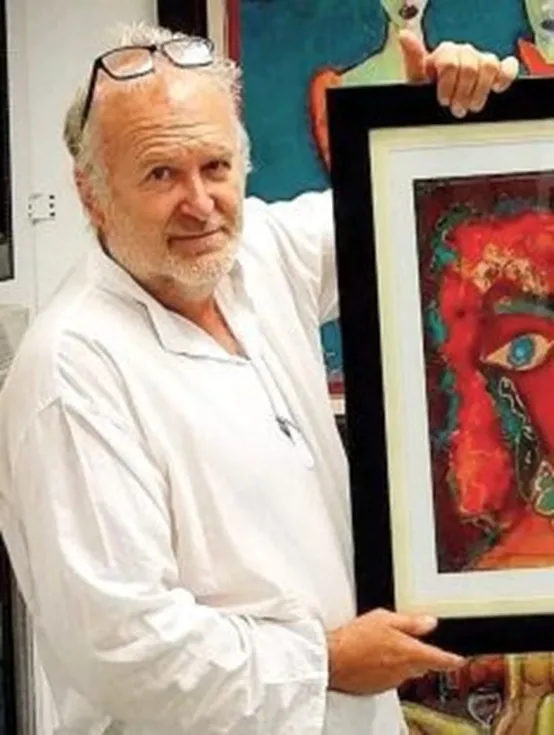
Some artists paint pictures, and then there are those who paint worlds. Laurens Barnard belongs to the latter. A man of contrasts—quiet in demeanour, yet boundless in imagination—his life’s work has been a continual crossing of borders: between cinema and canvas, between entrepreneurship and artistry, between what is real and what can only exist in dream.Born in the late 1950s, Barnard’s creative spark revealed itself early, when a high school project transformed into the beginning of a lifelong vocation. That flame would carry him first into the bustling, unpredictable world of filmmaking, where he cut and shaped stories for television, commercials, and cinema. Two decades, he lived in frames and edits, learning rhythm and timing not with a paintbrush but with spools of film.
This training left a mark—his paintings today still carry a cinematic quality, as if each canvas were a single frame from a movie shot in some parallel universe.
A Cinematic Painter
View Painting
View Painting
When Barnard eventually returned to
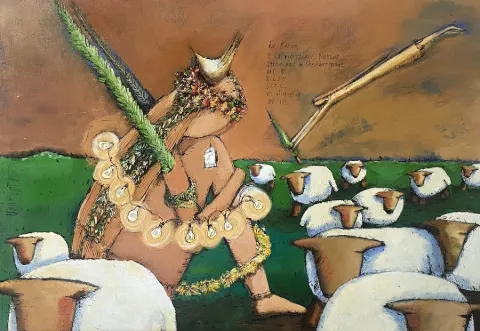
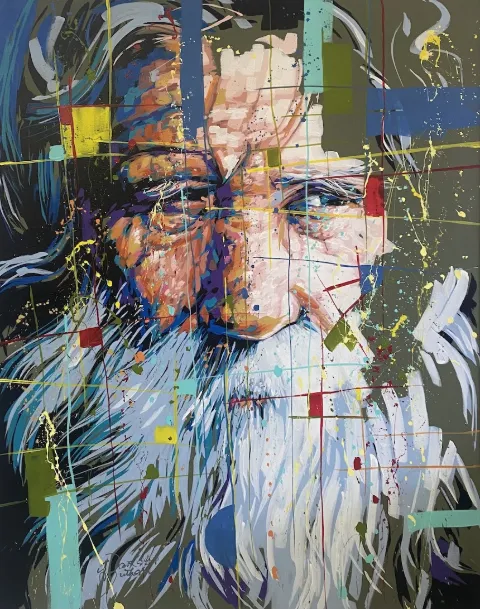
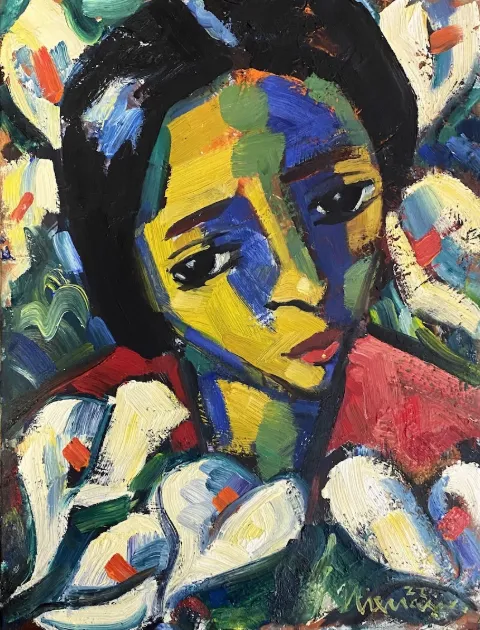
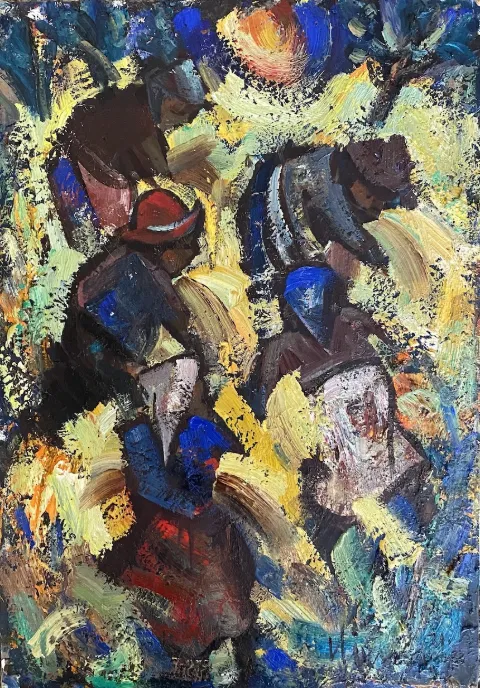
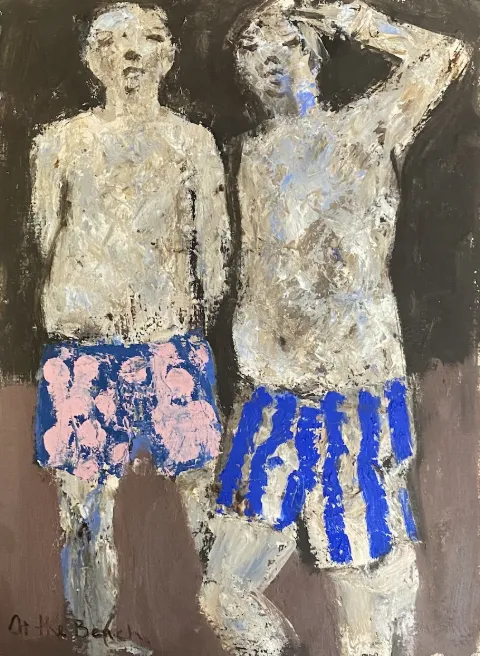
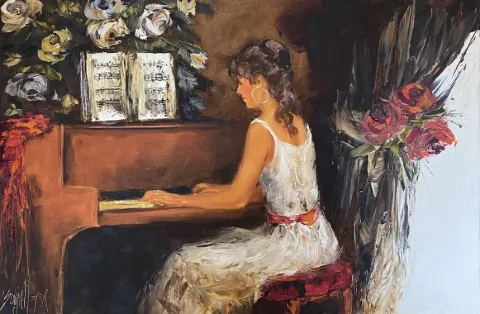
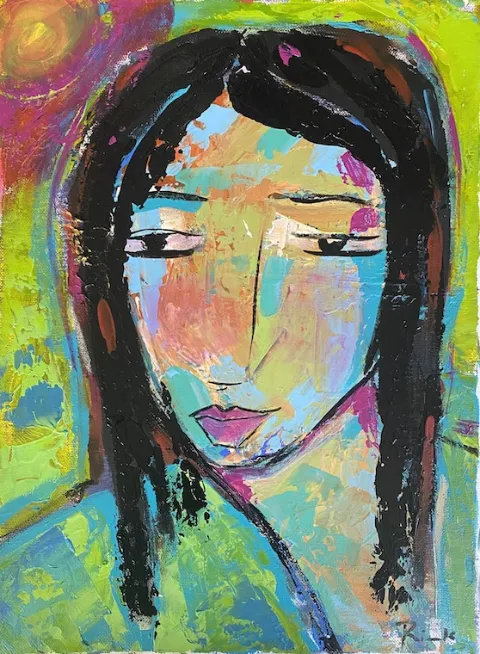
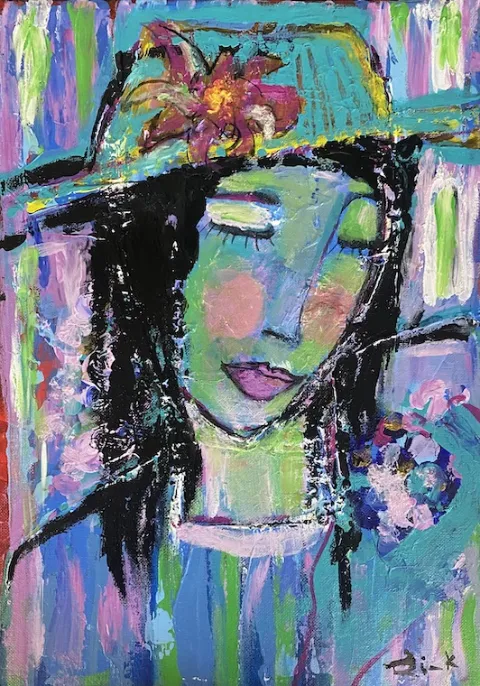
painting, it wasn’t with the delicate hesitation of someone revisiting an old hobby. It was with the urgency of a filmmaker who had learned how powerful images could be when strung together in sequence—and now wanted to compress that power into a single instant. His canvases are bold, saturated, and playful, populated by faces that look both familiar and alien, figures that slip between genders, and colours that feel as though they’ve been turned up past reality’s dial.To stand in front of one of his works is to be caught off-guard: first by humour, then by unease, and finally by revelation. His portraits, though whimsical at first glance, often carry subtle meditations on identity, culture, and the tensions between tradition and modernity. Barnard delights in contradiction—his figures are both mask and mirror, both parody and confession.
The Builder of Spaces
But Barnard is not only a maker of images; he is a builder of ecosystems. Over the years, he has opened galleries that became sanctuaries for artists, hosting exhibitions that drew together voices from South Africa, Europe, and beyond. His curatorial vision is expansive: he treats the gallery as a stage where conversations happen—not only between works of art, but between cultures, histories, and audiences.At one point, his space in Pretoria grew into one of the most extensive galleries on the continent. There, amid hundreds of works, he became known not just as a painter but as a cultural broker, placing international masterpieces alongside emerging local voices, and in one extraordinary instance, even bringing a Picasso into South African hands.
The Language of Colour
If there is a single hallmark to Barnard’s artistic language, it is colour. He does not use it sparingly, nor does he obey traditional harmony. Instead, his palette is unruly, joyous, and sometimes even mischievous. Acid greens collide with electric blues; fiery oranges melt into cadmium yellows. His colours are not background—they are the very subject of the painting. They pulse with rhythm, as though the canvas itself is alive with music.These hues are not merely decorative. They anchor his worlds, carrying emotional weight and symbolic resonance. They allow him to balance the fantastical with the human, the absurd with the intimate. In his hands, colour is both weapon and invitation: it disarms the viewer, then draws them into more profound reflection.
Legacy in Motion
Gallery walls or exhibition dates cannot neatly contain Barnard’s story. He is too restless, too curious, too willing to reinvent himself. From the editing rooms of television studios to the curation of vast exhibition spaces, from satirical portraits to mythic dreamscapes, his journey reflects an artist who refuses to be static.Even when the pandemic (covid19) forced galleries to close, he adapted, shifting his presence online and continuing to build bridges between artists and audiences. His practice remains as prolific as ever—hundreds upon hundreds of works, each one a portal into a world where fantasy collides with critique, where joy and satire share the same stage.To encounter a Barnard painting is to step into that collision. It is to laugh, then question; to luxuriate in colour, then wonder about its meaning; to be seduced by play, and then asked to reflect on power, culture, and identity.And that is perhaps the most accurate measure of his artistry: Laurens Barnard does not simply show us what he sees. He dares us to look again—and discover what we might have overlooked in ourselves.
Laurens Barnard: Architect of Other Worlds
What happens when a life behind the film camera shifts onto the canvas—do the rhythms of cinema echo in paint?Absolutely. The years Barnard spent in the film industry left him with an instinct for rhythm and timing that now pulses through his canvases. Film teaches the eye to cut, to juxtapose, to create tension by what you place next to something else. On canvas, Barnard condenses those lessons into a single frame. His colours strike like edits, his lines cut across surfaces like scene transitions, and his figures emerge as though paused mid-movement. The cinematic instinct lingers—it’s why his paintings feel alive, as if they are waiting to start moving again the moment you turn away.
View Painting
View Painting
View Painting
View Painting
Can a childhood spark truly fuel a lifetime of creation?Yes—and Barnard’s story is a testament to that truth. What began as recognition from a teacher during his school years did more than validate his talent; it rooted his sense of identity in art. That moment became an anchor point he carried into every chapter of his life. Even when he veered into film, entrepreneurship, or gallery curation, painting remained the central fire he circled back to. The spark did not fade—it evolved, absorbing every new experience until it was ready to explode onto canvas decades later with the maturity of lived life behind it.
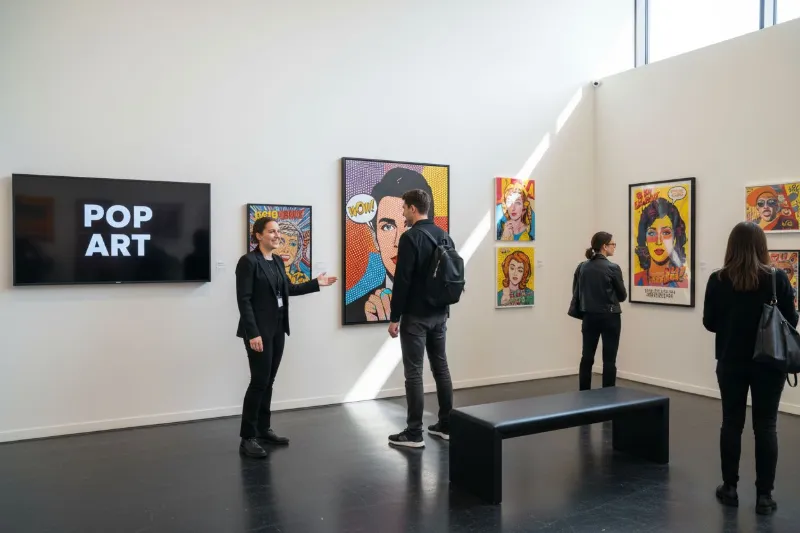
Is the gallery wall just another kind of movie screen?In Barnard’s vision, yes. The gallery is not a neutral white cube—it’s a stage, a frame, a space where stories unfold. Just as a filmmaker curates which shots appear in sequence, Barnard curated his gallery walls to create conversations between works: between artists, between cultures, between past and present. Visitors weren’t just looking at paintings hung in neat rows; they were walking into a carefully orchestrated narrative. Like a film, the gallery experience had rhythm, crescendo, and surprise. Barnard turned walls into screens that told stories without moving pictures.
TV Adverts:Barnard brought his creativity into commercial projects, crafting television adverts that combined storytelling with striking visuals. These experiences sharpened his sense of timing and composition—lessons that would later inform the rhythm and energy of his paintings.
Established Laubar Art & Film: Through the founding of Laubar Art & Film, Barnard fused business acumen with artistic vision, establishing a name synonymous with innovation, quality, and discovery in the contemporary art world.
900+ Paintings in 20 Years & Opening the Largest Gallery in Africa:Over twenty years, Barnard produced more than 900 paintings, each alive with colour, narrative, and playful energy. His ambition extended to space as well as creation—he opened one of the most extensive galleries in Africa, a testament to his vision of making art immersive, accessible, and transformative on a grand scale.
View All Paintings
Conclusion
The Uncontainable Vision of Laurens BarnardLaurens Barnard is not an artist who can be neatly categorised, boxed, or reduced to a single style or medium. His career, spanning decades, defies simplicity—moving effortlessly from the precise cuts of film editing to the riotous energy of his canvases, from curating one of Africa’s most extensive galleries to nurturing international artistic dialogue. What unites these seemingly disparate chapters is a restless imagination, an unyielding curiosity, and a commitment to creating worlds that are at once playful, provocative, and profound.At the heart of Barnard’s work is a celebration of contradiction. His canvases are alive with colour and humour, yet beneath that playful surface lies a subtle critique of society, identity, and culture. Masked faces, gender-fluid figures, and surreal interactions invite us to question our assumptions. At the same time, his daring use of colour—acid greens, cadmium yellows, cerulean blues—pulls us into spaces where joy, chaos, and reflection coexist. He challenges us to find meaning in absurdity and humanity in distortion, turning every brushstroke into both commentary and celebration.Barnard’s impact extends beyond the canvas. As a gallery owner and curator, he has shaped spaces where dialogue, discovery, and experimentation flourish. He has given platforms to hundreds of artists, championed bold new visions, and demonstrated that the value of art is not measured solely in sales or acclaim but in its ability to provoke, delight, and transform. Even in the face of global disruptions, he has adapted, proving that walls or markets do not constrain creativity—it is a force that finds new forms and audiences.Ultimately, Laurens Barnard’s legacy lies in his refusal to settle, his delight in paradox, and his ability to make the extraordinary feel intimate. To encounter his work is to enter a world where colour is alive, where masks reveal truth, where laughter and critique walk hand in hand, and where imagination knows no bounds. His paintings are more than images—they are invitations: invitations to play, to reflect, to be unsettled, and, above all, to see the world anew.In a world often obsessed with labels, rankings, and transactions, Barnard reminds us that art’s true power is in its capacity to move us, challenge us, and transport us into other realms. His vision is uncontainable, his worlds limitless, and his artistry—like the colours on his canvases—vibrant, audacious, and unforgettable.